
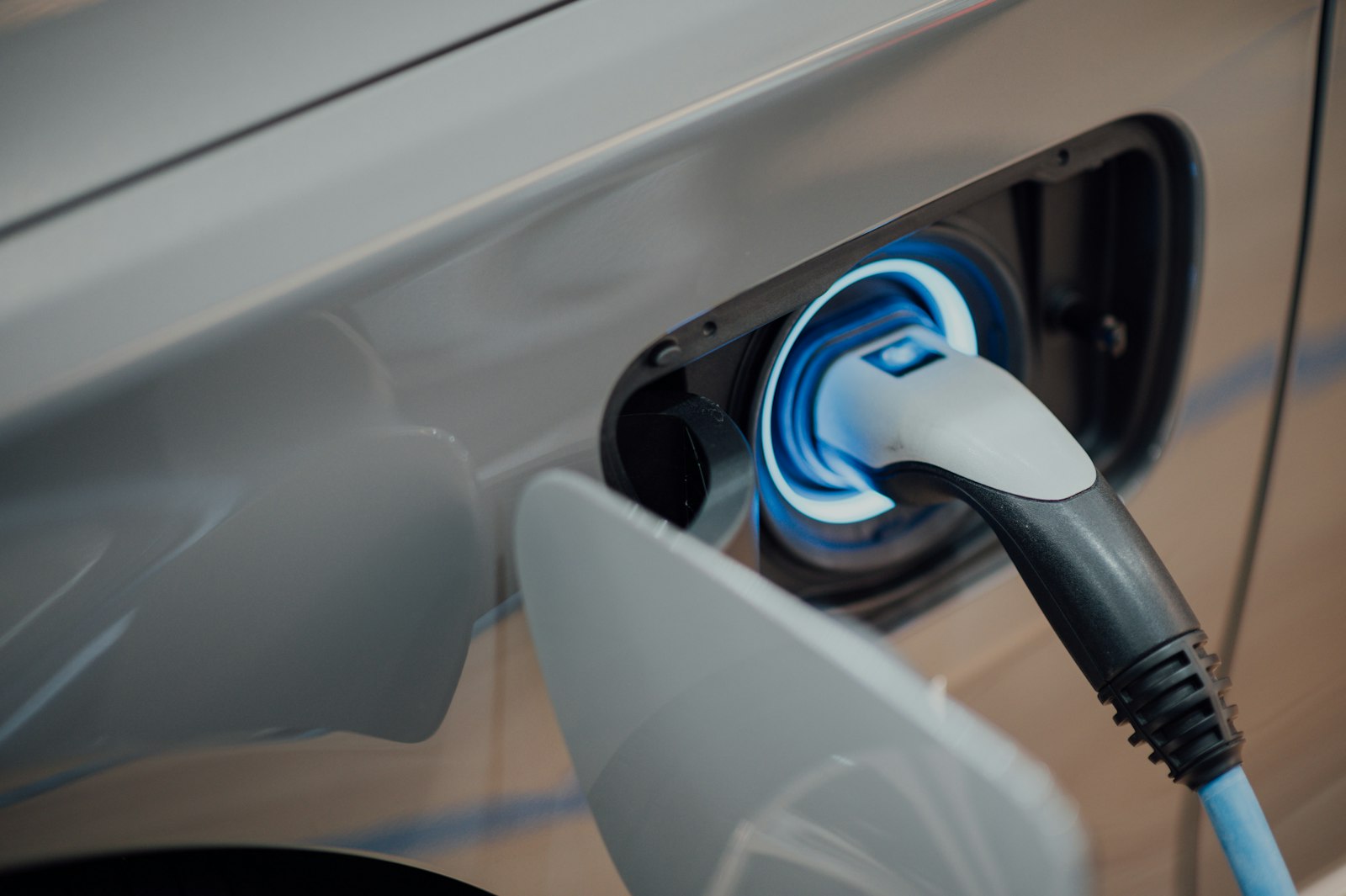
Why current sensing matters in EV charging
EV chargers move large amounts of power between the grid and a high-voltage battery pack. Reliable, accurate current sensing is critical for:
- Charge profile control — implementing CC/CV charge stages with precision
- Safety / overcurrent protection — detecting fault conditions in microseconds
- Power factor correction (PFC) — phase current sensing for grid-side rectifiers
- Insulation monitoring — residual current detection per IEC 62109-2 / IEC 61851
A wrong sensor choice doesn't just hurt charge efficiency — it can fail isolation requirements that block product certification.
Step 1: Determine your peak DC current
Calculate your worst-case DC bus current first.
I_peak = (P_max × overhead_factor) / V_dc_min
For a 150 kW DC fast charger with a 600 V minimum bus voltage and 1.6× overhead for transients:
I_peak = (150,000 × 1.6) / 600 = 400 A
Rule of thumb: Pick a sensor with continuous rating ≥ I_peak and measurement range ≥ 3× nominal to handle precharge events and short circuits without saturation.
Step 2: Define your isolation requirement
Match the sensor's working voltage and impulse withstand to your battery architecture:
| Battery architecture | Recommended isolation |
|---|---|
| 400 V DC nominal | 4 kV RMS impulse |
| 800 V DC nominal | 6-8 kV RMS impulse |
| 1,500 V DC (utility-scale) | 8 kV RMS reinforced |
Reinforced insulation is mandatory for any sensor crossing the primary-to-secondary safety barrier in a charger.
Step 3: Choose the right bandwidth
Bandwidth needs to cover your control-loop frequency with margin:
| Application | Switching frequency | Required sensor BW |
|---|---|---|
| AC OBC (PFC stage) | 50-100 kHz | 100-200 kHz |
| DC-DC stage of OBC | 100-200 kHz | 200-500 kHz |
| Traction inverter | 8-20 kHz | 100 kHz |
| Communication / billing | 50/60 Hz | 1 kHz |
A common mistake is undersizing bandwidth — it introduces phase lag in current control and degrades transient response.
Step 4: Pick the form factor
| Form factor | When to use |
|---|---|
| PCB through-hole | OBCs and small DC chargers (<25 A primary) |
| Bus-bar feed-through | Mid-range DC chargers (25-200 A primary) |
| Split-core / clamp | Retrofits and metering applications |
| Flexible Rogowski coil | Very high current (>1 kA) where bus-bar interruption isn't possible |
Step 5: Specify accuracy and drift
Charging is governed by the inverter's energy-meter accuracy class. For revenue-grade DC fast charging (regulated in EU and India), end-to-end accuracy should be ≤ 1 %.
A practical sensor budget:
- Sensor base accuracy: 0.5 % at nominal
- Temperature drift: ±150 ppm/°C
- Lifetime drift over 25 years: ±0.3 mA offset
Step 6: Select redundancy / safety class
For ASIL-B and above (per ISO 26262), use two independent sensors with disagreement detection. Most BMS architectures already do this for the pack-level shunt; replicate the same redundancy logic on the charger side.
Common mistakes to avoid
- Over-spec'ing primary current — reduces accuracy at typical operating point
- Ignoring temperature derating — 85°C ambient can halve continuous current
- Skipping bandwidth headroom — degrades current loop dynamics
- Using AC-only sensors on DC bus — Hall Effect is mandatory, not iron-core CTs
Recommended Contisys products for EV charging
These sensors are pre-qualified for EV charging applications. Click any to see datasheets and pricing.